Areas of research:
1. Monitoring of zoonoses
Zoonoses are infectious animal diseases, transmissible to humans. These are diseases caused by viruses, bacteria, protozoa or prions. According to the World Health Organization, more than 200 zoonotic diseases are known and new ones are still emerging. They represent a large burden for the sick and for the health system, causing suffering of humans and animals and great economic damage. Therefore, in our work we focus on the definition of risks related to selected zoonoses, monitoring of circulation of zoonoses in the environment, preventive measure and educational activities in the area. Specifically, we focus on:
- pathogenic microorganisms that cause the disease – monitoring the occurrence of Spirochetes with special regard to pathogenic Borrelia burgdorferi s.l. in ticks and other mites or insect representatives, monitoring of activity and positivity of ticks in selected locations (Pisarky, Zamilovaný hájek, Brno dam, etc.), Spirochetes cultivation with a focus on pathogenic Borrelia burgdorferi s.l.
- Confirmation of the presence of pathogens in the body and monitoring their interactions with the host – direct observation, monitoring of antibodies and the effect on non-specific immune mechanisms (phagocytosis, inflammatory parameters) in zoonotic pathogens (Coxiella sp., Francisella sp., Leptospira interrogans s.l., Toxoplasma sp., Bartonella sp., Rickettsia spp. and others)
- Prevention of zoonoses – study prevention of pathogens at various levels, studying interactions between haematophagous arthropods and their hosts, searching for new effective repeels
2. Study of physiological, immunological parameters and immune processes related to stress in endurance athletes
Preventional physical activity is currently considered to be effective prevention of civilization diseases such as osteoporosis, diabetes II. type, oncological and cardiovascular diseases. In recent years, however, there has been a significant interest in the operation of various kinds of very demanding endurance races, such as ultramarathons, stage endurance races, etc. These extreme races are often participated by amateurs who do not have the necessary training. During extreme sport load, a number of tissues and organ systems is damaged in the body. In addition to muscle damage, increased kidney load, cardiovascular system and liver tissue involvement, significant changes in the immune system may also occur. A well-known reaction is the so-called „open window“ theory, where after a very strong physical excercise, immunosuppression occurs, which is most often manifested by increased susceptibility to upper respiratory tract infections. It is not entirely clear whether it is due to immunosuppression or inflammation that occurs after extreme stress in the body. Our research activities in this area are aimed at contributing to understanding immune reactions after the effect of extreme loads.
Specifically, we focus on:
- sampling of biological material: blood, saliva, urine from volunteers participating in extreme endurance races or from control volunteers for comparison with probands.
- measurement and evaluation of selected parameters before and immediately after the race, or in the period of several hours after the race (numbers of red, white blood cells and platelets, differential number of leukocytes including sticks, hemoglobin, liver enzymes, glucose, ions, urea, creatinin, albumin, levels of antibodies in plasma and saliva, complement, lysozyme, cytokines and more).
Methodics:
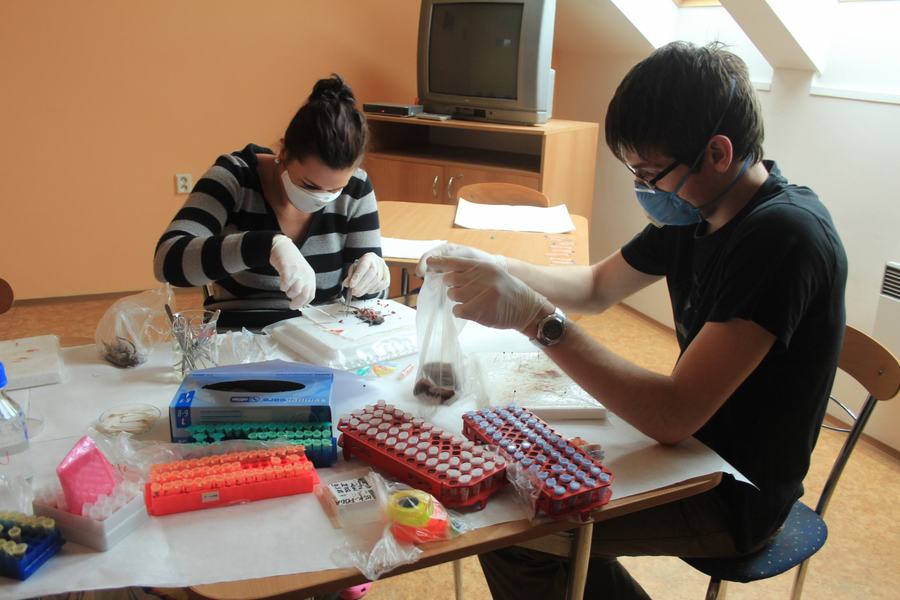
Field capture of rodents, autopsy of animal material, collection of tissues and organs, monitoring of tick-borne activities, mite collections, blood and other body fluids, questionnaire surveys, light microscopy and microscopy in the dark field, chemiluminescence analysis, PCR analysis, electrophoresis, Turbidimetry, Moving Object Bioassay.